

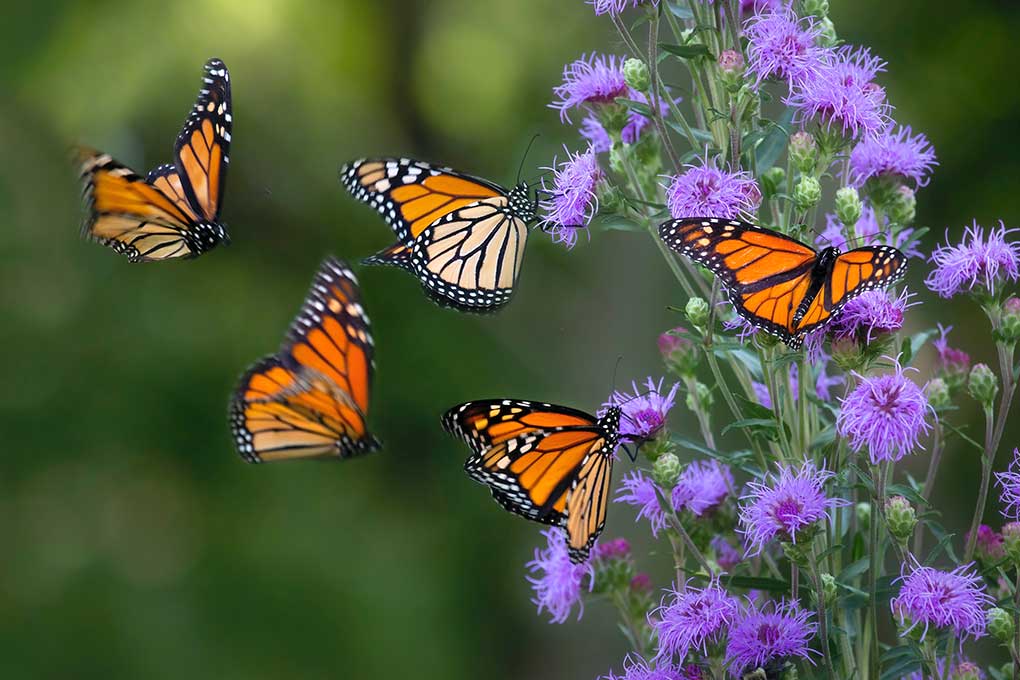
Monarchs help pollinate milkweed by feeding on nectar from flowers. Milkweed is the only plant monarch larvae and caterpillars will eat.
Milkweed is sprouting and blooming, providing a vital link to the life cycle of endangered monarch butterflies that flutter beautifully across Texas in their annual migration.
But environmentalists warn the colorful clouds are waning.
“The International Union for Conservation of Nature (IUCN) listed monarchs as endangered in 2022,” said Mary Abercrombie, environmental education coordinator for the city of Princeton. “This is partly due to a decline in the milkweed population, with which they have a symbiotic and exclusive relationship.”
Milkweed is the only plant monarch larvae and caterpillars will eat, Abercrombie said, but climate variations and the use of herbicides have cut the population of eastern migratory monarchs by more than 80%.
According to Abercrombie, many people are inclined to remove milkweed because it is poisonous to livestock. “When you see milkweed, leave it,” she said. “Do not mow it.”
Monarch caterpillars feed exclusively on milkweed leaves, safety ingesting the toxins and making the adult butterflies poisonous to predators like birds.
To read the full story and support your local newspaper subscribe to The Princeton Herald.














0 Comments