

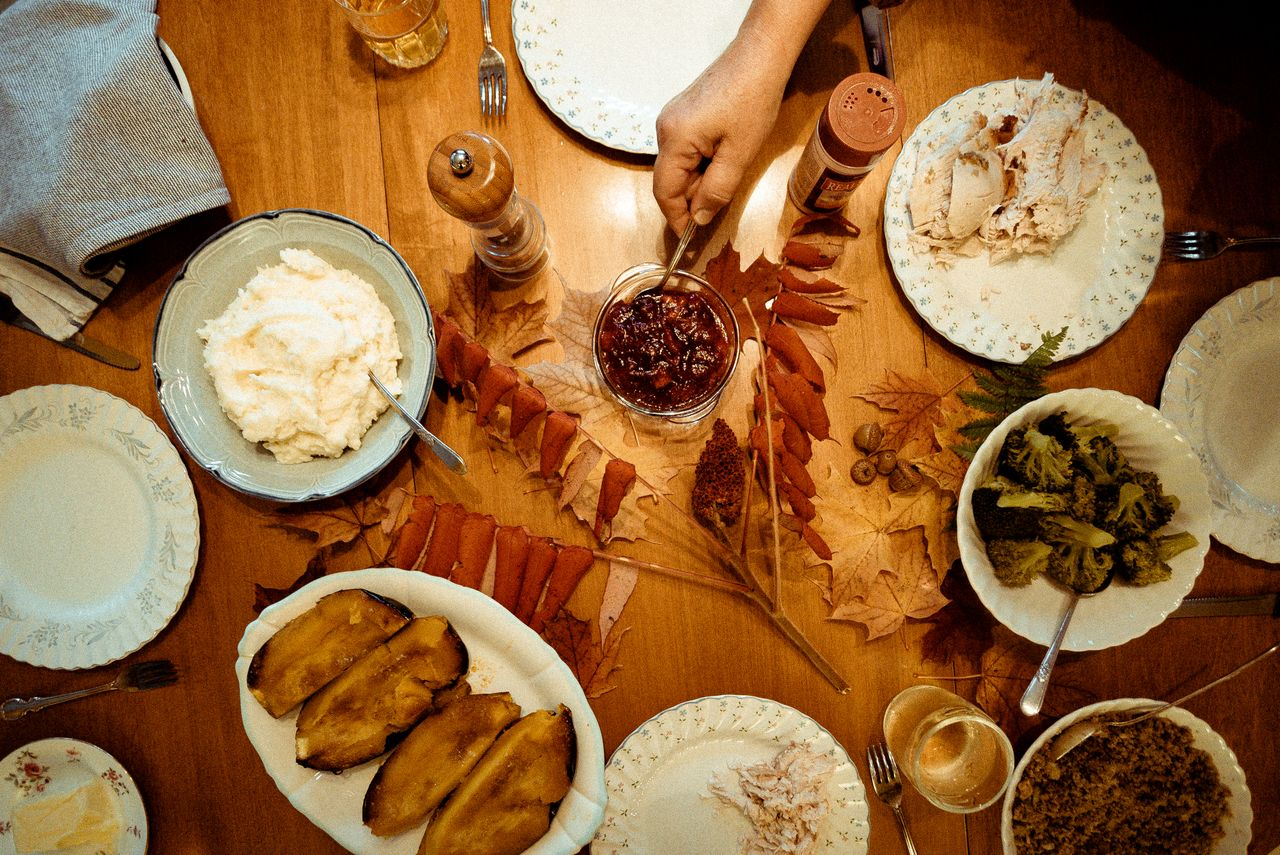
Originally published in November 2015, John Moore’s column reflects on the history and meaning of Thanksgiving.
By John Moore | TheCountryWriter.com
Most of us celebrate Thanksgiving without a second thought. That’s not how it was intended.
Contrary to what many say, America was founded on religious principles. Thanksgiving is proof of the important role faith has played in our nation’s history.
Those who fled England to come here in the early 1600s did so for religious reasons. The Pilgrims sought the freedom to worship God according to their beliefs.
And they were willing to risk everything to get it.
Their journey was difficult. Their first winter was worse. Many died from disease, exposure, and starvation. Those who survived had little more than the clothes on their backs and the determination to build a new life.
Yet, when their harvest came, they stopped to give thanks.
Historical accounts say that the gathering we commonly recognize as the first Thanksgiving was a feast shared with Native Americans, whose assistance had helped the Pilgrims survive. It was an occasion of gratitude for blessings received.
People who had endured unimaginable hardship were thankful for what little they had.
In 1863, President Abraham Lincoln proclaimed a national day of Thanksgiving, calling upon Americans to offer “Thanksgiving and Praise to our beneficent Father who dwelleth in the Heavens.”
Lincoln made that proclamation during the Civil War, when the country was tearing itself apart. Even in one of America’s darkest hours, he recognized the importance of acknowledging God’s blessings.
It later became a permanent federal holiday, observed on the fourth Thursday of November.
Thanksgiving is unique. At its heart, its purpose is to say thank you to God.
It was not designated as a day of overeating and watching football. It was set aside as a day for us to stop what we’re doing, think about everything for which we should be grateful, and tell Him thank you for it.
That’s it.
But how many of us actually still do that?
We spend days planning the menu, hours preparing the food, and minutes eating it. Then we settle into a recliner, loosen our belts, and watch football.
There’s nothing wrong with enjoying a good meal or a football game. I enjoy both. But when the festivities overshadow the reason for the holiday, we’ve missed the point.
Public prayer and praying aloud at home used to be common. Now, the former is increasingly rare in many settings, and the latter I see far less than I used to.
Giving thanks does a simple thing. It makes us cognizant of what we have and how very fortunate we are to have it.
Those born since World War II, my generation included, were blessed with so much, so quickly and so easily, that we have known relatively little want.
Many of us may not have had everything we wanted, but we certainly have had most of what we needed.
There’s a difference.
My parents and grandparents understood that difference. They knew what it meant to make do, repair what was broken, and appreciate what was on the table.
They didn’t need a special occasion to be grateful. They understood that another day, another meal, and another opportunity to be with family were blessings.
We could learn something from them.
Consider the things we take for granted. Clean drinking water. Electricity. A warm bed. A refrigerator full of food. The ability to pick up a phone and hear the voice of someone we love.
Millions of people around the world would consider any one of those things a luxury.
Sadly, our abundance of blessings has ironically led to a holiday that often focuses more on gluttony and the gridiron than God and gratitude.
The greatest blessings aren’t things at all. They’re the people gathered around our tables. The memories of those who once sat there. The friendships that have lasted through difficult times. The forgiveness we’ve received and the opportunities we’ve been given.
And sometimes, the blessing is simply waking up to another day.
We should be on our knees daily, not just on Thanksgiving. Prayer provides us a type of communication that our smartphones never will: a direct connection to God.
It doesn’t require Wi-Fi, a password, or a monthly subscription.
And the connection is always available.
So, this Thanksgiving, let’s put down our phones, turn off the TV, join hands, bow our heads, and give thanks.
Not just for the things we wanted and received, but also for the things we needed and were provided.
Because, Lord knows we have a lot to be thankful for.
© 2015 John Moore
John’s new book, Write of Passage: Volume 3, is available on Amazon. Write to John at TheCountryWriter.com.
Enjoying this column? Let us know. Support your local community newspaper — subscribe to The Princeton Herald.







0 Comments