

A divided Princeton City Council approved the Fiscal Year 2025-26 budget and maintained the current property tax rate, which Kelley Wilson, the city’s chief financial officer, said was one of the lowest in Collin County.
Councilmembers Terrance Johnson and Cristina Todd voted against the budget and tax rate with Johnson saying the budget was an embarrassment because the city had dismissed the pleas of its residents.
“It’s exhausting to come up here and fight, and there has been no compromise in my eight months of serving up here,” Johnson said after public hearings at the Monday, Sept. 8, meeting.
Councilmember Ben Long said the finance department had done a good job of putting the budget together although it did not provide everything the city needed, such as more police officers.
“I’m in support of this budget, even though I don’t like it,” Long said. “It’s not the best thing in the world. It’s not getting what we need [or] somewhere close to getting what we need.”
Long said the city was being run on residential property taxes and needed a much broader commercial base.
“Give it five years, we’ll have a lot more commercial development here … maybe we might have some more money to do things that we really want to do,” he said.
Todd blamed former administrations for setting up too many Tax Increment Reinvestment Zones and Public Improvement Districts, “which means from those communities, we are not going to be getting the full tax rate from them, which means the remaining residents, basically their tax dollars, have to pick up that gap.”
Todd said, “We have dug a hole so deep, and we are trying to climb out, and we can’t afford [police] officers because of it.”
She said everyone’s trying to do the best that they can with what they’ve got, but at the end of the day, councilmembers are the ones who make the decisions and have the final say … “and we have failed our residents, we have failed our staff, and we need to do better,” she said.
The budget covers the fiscal year beginning Oct. 1, 2025, and ending Sept. 30, 2026. It sets out government-wide expenditures, transfers, and capital projects totaling nearly $179.9 million.
The new budget will guide spending on city operations, debt service, and capital projects for the next fiscal year, supported in part by the property tax revenue increase tied to Princeton’s continued growth.
The plan was first presented to council members Aug. 11, followed by a budget work session Aug. 25, where staff gave detailed briefings and council provided direction on potential changes.
The proposed 2025 ad valorem tax rate totaled $0.4402 per $100 valuation, distributed with $0.2543 for Maintenance and Operations (M&O) and $0.1859 for Debt Service (I&S) adding up to a total rate of $0.4402.
Wilson said that represented an effective increase of 3.50% over the no-new-revenue maintenance and operations tax rate.
Also on the agenda, council approved the third option, costing $6.5 million, for the JJ “Book” Wilson skate park and accepted the voluntary resignation of Gentry Kelton from Place 1 on the Planning & Zoning Commission.
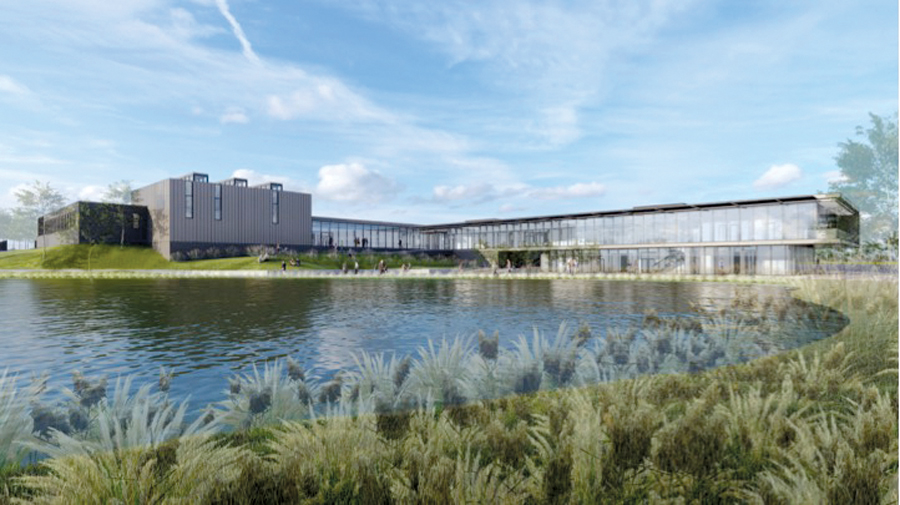
During a work session preceding the regular meeting, councilmembers were presented plans for the new multi-generational recreation center expected to be completed two years after work begins next year.
Director of Parks & Recreation Chase Bryant said the project was funded by bonds approved in November 2023 and had increased in price to $75 million from the initial estimate of $30 to $40 million,
Bryant said it would be an 85,000-square-foot complex including an indoor aquatics center, fitness and training areas, tracks, lockers and multipurpose rooms.
“To better accommodate the expanded scope, the project site was relocated from a 6-acre parcel at Monte Carlo Boulevard and Beauchamp Boulevard to a larger tract within the Georgia Land and Cattle Company off Myrick Lane,” he said.
Members also discussed the need for updating the Master Drainage Plan last created in 2018. Public Works Director Tommy Mapp said a comprehensive update would typically include updated modelling for major drainage basins and associated sub-basins to
account for new development impacts and condition changes to the drainage areas.
Mapp estimated the cost could range from $750,000 to over $2.5 million, depending on the scope of the project, and Assistant City Manager Fred Gibbs said he would return to council with a more detailed cost analysis.
Residents have complained of construction problems with new houses because of inadequate drainage.
One homeowner told council he had spent $100,000 for piers and drains under his new $190,000 house and was now looking to move.
The next regular meeting of the Princeton City Council is scheduled for Monday, Sept. 22.
Stay informed, support local journalism, by subscribing to your community newspaper The Princeton Herald today!
By Bob Wieland | [email protected]









0 Comments