


Eighteen early voting polling places in Collin County will be are open for the special election on Saturday, May 2.
Four candidates are running for Place 4 on the Princeton City Council and include Hassan Abdulkareem, Sharad Ramani, Jaisen Rutledge and Jan Goria.
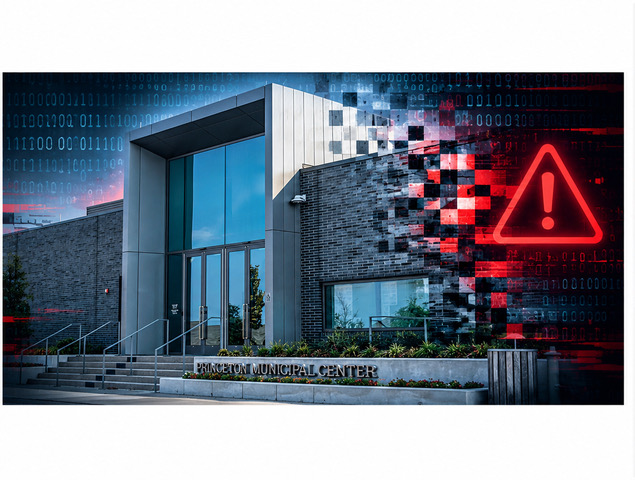
Voting locations include the Training Room of the Princeton Municipal Center, 2000 E. Princeton Drive.
However, registered voters may cast early ballots at any of the 17 other county locations open before Election Day.
The early voting centers will be open 8 a.m. to 5 p.m. on Thursday, April 23; Friday, April 24 and Saturday, April 25.
They will also be open 7 a.m. to 7 p.m. on Monday, April 27 and Tuesday, April 28.
Election Day balloting is also 7 a.m. to 7 p.m. on Saturday, May 2.
Here are profiles based on each candidate’s response to questions by The Princeton Herald.
Jan Goria
City Council candidate Jan Goria says she is running because she wants what’s right for the citizens and city of Princeton. During five decades in Collin County, Goria said she has witnessed the rapid growth of other nearby cities. “I am committed to ensuring that Princeton grows responsibly while preserving its small-town charm and natural beauty,” she said. Goria, one of four candidates seeking Place 4 in the Saturday, May 2, special election, said Princeton is at a pivotal moment. “Growth is inevitable, but how we manage that growth will determine the future of our community,” she said. Goria said she was a small business owner responsible for day-to-day activities from purchasing, hiring, maintenance, permits and customers services. As a result, she said her decades of professional experience shaped strong organizational skills, practical decision making and commitment to fairness. “We need to listen to the residents and encourage civic engagement while fostering transparency in local government,” she said. The candidate said Princeton’s issues stemmed from the rapid development before infrastructure was in place, leading to increased traffic and drainage problems. Goria encouraged residents to monitor city meetings and speak out when something needs attention.
Hassan Abdulkareem
Too much of Princeton’s sales tax revenue leaves the city because residents have to go elsewhere for shopping, dining, entertainment and basic services, Place 4 candidate Hassan Abdulkareem says.
“That means other cities benefit from money that should be helping Princeton grow stronger,” he said. “I want to keep Princeton money in Princeton. At the same time, infrastructure such as roads and public safety must keep pace with growth, and we need to retain qualified staff because long-term progress becomes harder when experienced people leave for other cities.
Abdulkareem, a business manager, said he is running for council because Princeton does not need passive leadership in this time of rapid growth. “The decisions we make today will shape our city for decades to come,” he said. “Princeton needs leaders who think ahead, ask tough questions and act proactively before challenges become permanent problems.”
He said he wants Princeton to grow with intention, not just in size, but in infrastructure, economic opportunity and overall quality of life. He also wants to help restore and strengthen trust in local government by supporting transparent leadership and ensuring we hire and retain qualified professionals who can manage the city effectively.
Abdulkareem said he has a proactive and results-driven mindset. “I bring initiative, accountability and follow-through,” he said
Sharad Ramani
Residential homeowners carry too heavy a share of Princeton’s financial requirements, says Sharad Ramani, a candidate for Place 4 on the City Council.
Citing economic diversification as the city’s most pressing issue, Ramani said Princeton must broaden the tax base by creating a policy environment that aggressively attracts commercial and medical developments.
“To do this, the council must provide clear strategic direction to city staff and ensure our zoning and infrastructure plans are ‘business-ready,’” he said.
Ramani said residents deserve a council member who prioritizes results over bureaucracy.
“I don’t just want to talk about ‘oversight issues’ — I want to apply my 30 years of strategic leadership to solve them,” he said.
Ramani said he brings “a rare combination of technical and fiscal expertise,” with a bachelor’s degree in mechanical engineering and an MBA in supply chain.
“Unlike generalized management, my background is in strategic procurement and operations — fields where accuracy, contract negotiation and multi-million-dollar budget oversight are daily requirements,” he said.
Ramani said he advocated successfully for winter quarterly averaging of wastewater billing “by presenting logical, well-researched arguments that helped the council make an informed decision for the community.”
He said his biggest contribution would be in operational and fiduciary oversight. “While others may focus on internal organizational structure, my focus is on the bottom line,” Ramani said.
Jaisen Rutledge
Galloping growth is not necessarily the most pressing issue facing Princeston, City Council candidate Jaisen Rutledge says. “I would challenge that we have a process and oversight issue — there is opportunity to clearly outline how things are handled in the city,” Rutledge said.
He said the city needs a framework showing lines of communication to determine who is responsible and who signs off on issues, both big and small.
“Once that is established appropriately, issues like WQA [winter quarter averaging of wastewater billing] and development problems will have clear owners and it will be easier to address gaps, whether it is process or people,” Rutledge said.
A former chair of the Princeton Community Development Corporation, Rutledge said decisions made by council will have lasting impact.
“We won’t get many opportunities to get some of these things right,” he said. “I have been involved in serving in Princeton long enough to have had line of sight to both successes and to some of its crucial opportunities.”
Rutledge said he is vice president of a Fortune 100 company and earned a bachelor’s degree in organizational leadership and a master’s in business administration.
“I believe that my experience puts me in a unique position to address those issues in a way that will include integrity, transparency and build bridges where some may create more division,” he said.











0 Comments